




By Faith Anene, Kakamega
Kenya is taking decisive steps to formalise and professionalise the childcare sector, with Kakamega County emerging as a model in advancing policy dialogue on the value of care work.
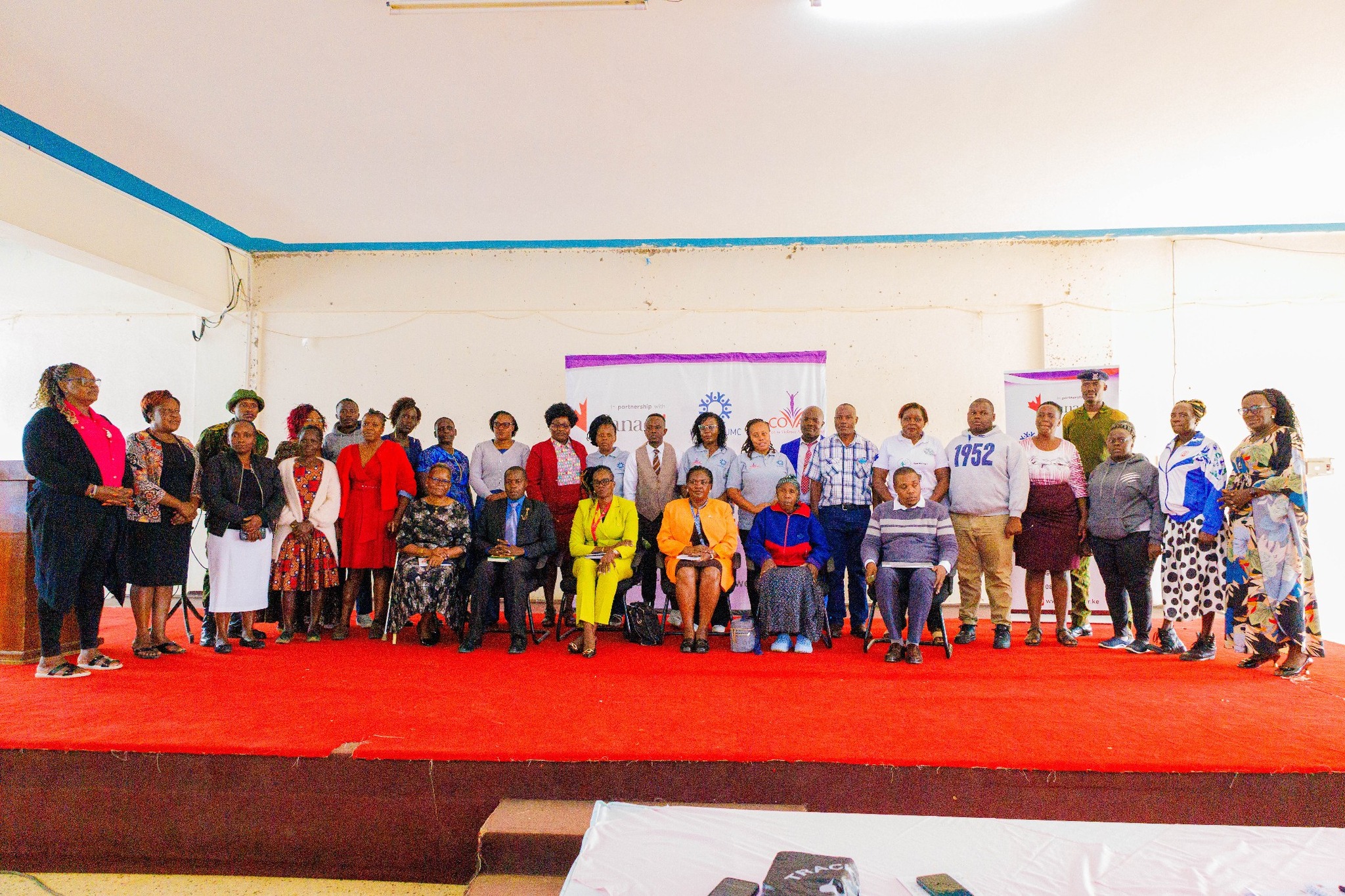
During a county level town hall meeting convened by the Coalition on Violence against Women (COVAW) in partnership with World University Service of Canada (WUSC) under the Action for Paid Childcare Sector Transformation (ACT) project.
Policymakers, childcare workers, and gender advocates called for urgent reforms to recognize childcare as a vital economic sector and a driver of women’s empowerment.
Speaking during the forum at Masinde Muliro University of Science and Technology (Mmust) during the Dr Rose Opiyo, an Academic and Researcher in Child Care said that the goal is to “professionalise the business of childcare in Kakamega County” and build a system that values those who care for the children aged 1-5 years.

“The reason we are having this dialogue is simple. We want to build profound care for childcare workers in Kenya,” Dr Opiyo said, adding, “Our goal is to professionalise childcare in Kakamega and the country at large because children are the heartbeat of our society, and their wellbeing reflects our collective progress.”
Dr Rose, who doubles up as an Associate Dean in the School of Education at Mmust, said that caring for those who look after the children while they are still in their tender age helps build the foundations of a stronger and more compassionate society.
The ACT project, funded by Global Affairs Canada, is part of a four year initiative in Kenya and Malawi to transform paid childcare from an informal, low-paid job into a dignified and regulated profession.
The project aims at transforming paid childcare work from a job of last resort into a vocation of choice, one that is dignified, fairly compensated, and professionally recognized.
The ACT project adopts a systems-based, gender-transformative, and locally driven approach to improving conditions for women in the paid childcare sector and unlocking its potential as a catalyst for economic empowerment.
Among those challenging gender stereotypes was Chrisantos Wanga, a community area administrator from Ikolomani Sub-county who is helping to redefine fatherhood in his community.
“I am here to show that men, too, can play active role in childcare,” Wanga said. “We’ve established four childcare centres, each with a board of five men who actively participate in caregiving. The results have been remarkable. The community has embraced the idea, and men are now proudly involved in raising well-mannered, responsible children.”
For Joyce Wafuo, the County Director of Gender Development, Children Services and Labour, the shift must begin with policy recognition.
Ms Wafuo said childcare should be recognised as a vital economic sector that contributes to employment creation, empowerment, and even to the GDP of Kakamega County.
She added that through the Intergovernmental Gender Sector Working Group, they had observed how childcare workers, especially those in the paid sector often unrecognised and unrepresented, noting that the National Care Policy had come at the right time.
Her colleague, Esther Wasige, the County Director of Children Services from the national government, questioned who truly stands for caregivers.
“The early years, especially from ages one to three, are critical for brain development,” she said. “Those caring for our children must be professionals, passionate, trained, and appreciated. We have unions that defend others, but who protects the rights of domestic and childcare workers? This is only the beginning, but with strong partnerships, we can elevate childcare work to be a respected profession.”
Kenya’s childcare sector, employing more than two million domestic and centre-based workers, is one of the most critical yet least recognised pillars of the country’s economy.
COVAW and its partners are calling for the formalisation of childcare services, improved access to training and certification, financial inclusion for women led childcare enterprises, and the integration of SGBV prevention programs across the sector.
According to a Capacity Assessment Survey conducted under the ACT project, most childcare workers in Kenya operate without contracts, legal safeguards, or access to fair compensation.
The study, which surveyed 384 paid domestic and centre-based childcare workers across Nairobi, Kisumu, and Kakamega counties, found that 88 percent of workers lack formal contracts, leaving them vulnerable to exploitation.
Nearly 70 percent have not received training on preventing sexual and gender-based violence (SGBV), and 59 percent remain unaware of existing childcare policies meant to protect their rights.
Financial exclusion is another major challenge, three out of four childcare workers lack access to financial services, and only two percent use formal banking systems.
“These statistics reveal a stark reality – the very women who care for Kenya’s children are left unprotected and undervalued. This is not just a gender issue, it’s an economic and social justice issue as they make it possible for others to go to work and yet their own work is treated as unskilled,” said Esther Gitau, a Program Associate at COVAW, who leads the ACT-Women in Paid Child Care project in Kisumu and Kakamega Counties.
Moderating the dialogue, Vivian Ayuma, Vice Chairperson of the Kakamega County Public Service Board, issued a clear call to action.
“This is a call to transform childcare from a job of last resort into a vocation of choice,” she said. “We must collaborate, regulate, and professionalise childcare. Excellence in adulthood begins between ages zero and three. If caregivers at that stage are not well-trained, the quality of development suffers.”
Beatrice Naliaka, a childcare worker from Kakamega, spoke from experience. “Taking care of children aged zero to three is not easy,” she said. “It requires patience and love. Sadly, many parents treat caregivers harshly, which affects both us and the children. Childcare is a profession like any other. We deserve respect, fair treatment, and good working conditions.”
The ACT project aims to reach more than 42,000 women childcare providers across Kenya and Malawi, advancing training, financial inclusion, and rights awareness.
COVAW and its partners are calling for the formalisation of childcare services, improved access to training and certification, financial inclusion for women led childcare enterprises, and the integration of SGBV prevention programs across the sector.