




By Caren Owino, Kisumu
Kisumu Port is experiencing remarkable growth in cargo handling and revenue, driven by major infrastructure upgrades and increasing trade across Lake Victoria, positioning the facility as a key regional gateway for commerce in East Africa.
Speaking during the Agricultural Society of Kenya (ASK) Kisumu Show, Kisumu Port Manager Elijah Chirchir said the port has undergone a dramatic transformation over the past eight years.
“At Kisumu Port, we have seen a lot of transformation and an increase in business. In the year 2017, we were able to handle a mere annual throughput of 4,300 metric tonnes, but by last year, in 2025, we were able to handle 459,000 metric tonnes. That shows a lot of growth as far as our business performance is concerned,” said Chirchir.
According to Chirchir, the port currently handles large volumes of fuel destined for Uganda, alongside ceramic materials, steel billets and other cargo, making it one of the busiest inland ports in the region.
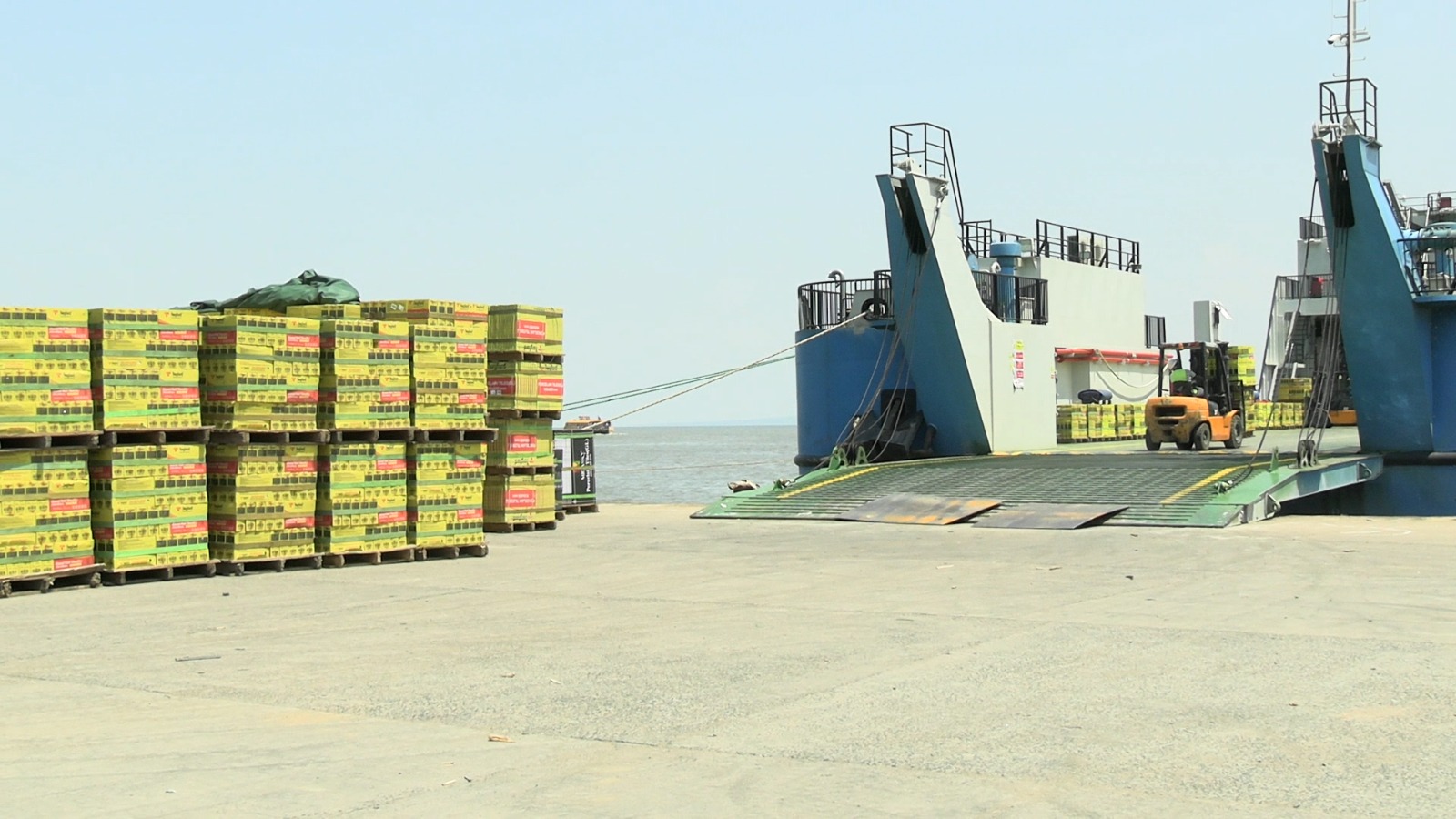
“Currently, we are handling large volumes of fuel destined for Uganda, followed by ceramic materials and steel billets. These form a significant portion of our exports. We are continuing to develop the port further in order to attract more business, especially local investors who may wish to import goods from neighbouring countries such as Uganda and Tanzania, and to ensure that a wider variety of goods is available,” he said.
The surge in cargo volumes has been supported by extensive infrastructure improvements aimed at increasing the port’s operational capacity.
“For Kenya, we can say that trade has been favourable because we export more than we import. Through the use of water transport, traders are able to enjoy economies of scale due to the reduced cost of transport. It is also helping to decongest our roads because vessels reduce the number of trucks on the highways,” Chirchir said.
Chirchir said the Kenya Ports Authority has undertaken dredging works to deepen the harbour, allowing larger vessels to dock safely, while also expanding the cargo yard and extending the quay.
“We are currently undertaking a lot of infrastructure development. We have carried out dredging to increase the depth of the port so that we can handle even larger vessels. We have also expanded the yard space and increased what we call the quay length by 100 metres. Initially, it was 292 metres, but now it is 392 metres. This has been done to enable us to handle larger vessels,” he said.
He noted that Kenya continues to enjoy favourable trade through the port, with exports exceeding imports. The use of water transport has also significantly reduced the cost of moving goods while easing congestion on major highways.
“For Kenya, we can say that trade has been favourable because we export more than we import. Through the use of water transport, traders are able to enjoy economies of scale due to the reduced cost of transport. It is also helping to decongest our roads because vessels reduce the number of trucks on the highways,” Chirchir said.
He added that the planned connection between Kisumu Port and the Standard Gauge Railway (SGR) will further strengthen multimodal transport, making the movement of cargo faster and more efficient across the region.
“Kisumu Port is going to transform this region. With the coming of the Standard Gauge Railway, we are going to have a well-established multimodal transport system, and everybody will benefit. We also want to encourage farmers and those involved in aquaculture to take advantage of the opportunities provided by Kisumu Port,” he said.
Looking ahead, the port expects to surpass half a million metric tonnes of cargo by the end of the year. Chirchir said the growth in business has also translated into increased revenue, with the port generating more than KSh37 million during the last financial year.
“Going forward, we know that the future is bright. By the end of this year, we expect to handle more than 500,000 metric tonnes of cargo. We used to generate very little revenue, but currently our revenue has increased. In the last financial year, we registered more than KSh37 million in revenue,” he said.
To sustain the momentum, Kisumu Port is planning additional investments, including the construction of fish landing sites, cold storage facilities, value-addition centres, modern cargo-handling equipment and ferry services along Lake Victoria routes.
“Once the fish landing sites are completed, people will be able to trade more effectively, especially in the fishing sector. We are also planning to establish value-addition facilities such as cold storage and to install more cargo-handling equipment, which will further increase revenue. In addition, we are planning to develop ferry services operating along the lake routes,” Chirchir said.
He said the ongoing investments are expected to attract more vessels, deepen trade with Uganda and Tanzania, create employment opportunities and cement Kisumu Port’s position as one of the region’s leading inland trade hubs.