



By Faith Anene, Nairobi
Sexual health is more than the absence of disease. It is about access to information, prevention, testing and treatment without fear, stigma or discrimination.
As Kenya marked World Sexual Health Day on September 4, the AIDS Healthcare Foundation (AHF) called for renewed investment in sexual health services, warning that progress against HIV could be undermined if prevention and routine screening are neglected.
Kenya has made substantial gains in its HIV response. But the latest national estimates show that the epidemic remains a significant public health concern.
According to the Kenya 2026 HIV Estimates, about 1.48 million people are living with HIV, with 13,936 new infections and 19,434 AIDS-related deaths estimated annually. HIV prevalence among people aged 15 to 49 stands at 3.22 per cent.
The figures also show progress. An estimated 91 per cent of people living with HIV are on antiretroviral therapy, while 87 per cent are virally suppressed. But gaps remain, particularly in prevention, diagnosis and sustained access to care.
For health advocates, the lesson is clear: the HIV response cannot afford to become complacent.
“Sexual health deserves the same investment and urgency as any other part of a person’s health care,” said Terri Ford, AHF Chief of Global Advocacy, Policy & Marketing.
“Over our decades of experience, we know what works: testing, treatment, and condoms.”
The challenge extends beyond HIV. Sexually transmitted infections such as syphilis, gonorrhoea, chlamydia and trichomoniasis can spread without obvious symptoms. A person may therefore have an infection, transmit it to a partner and only seek treatment when complications develop.
That makes routine testing an important part of sexual healthcare.
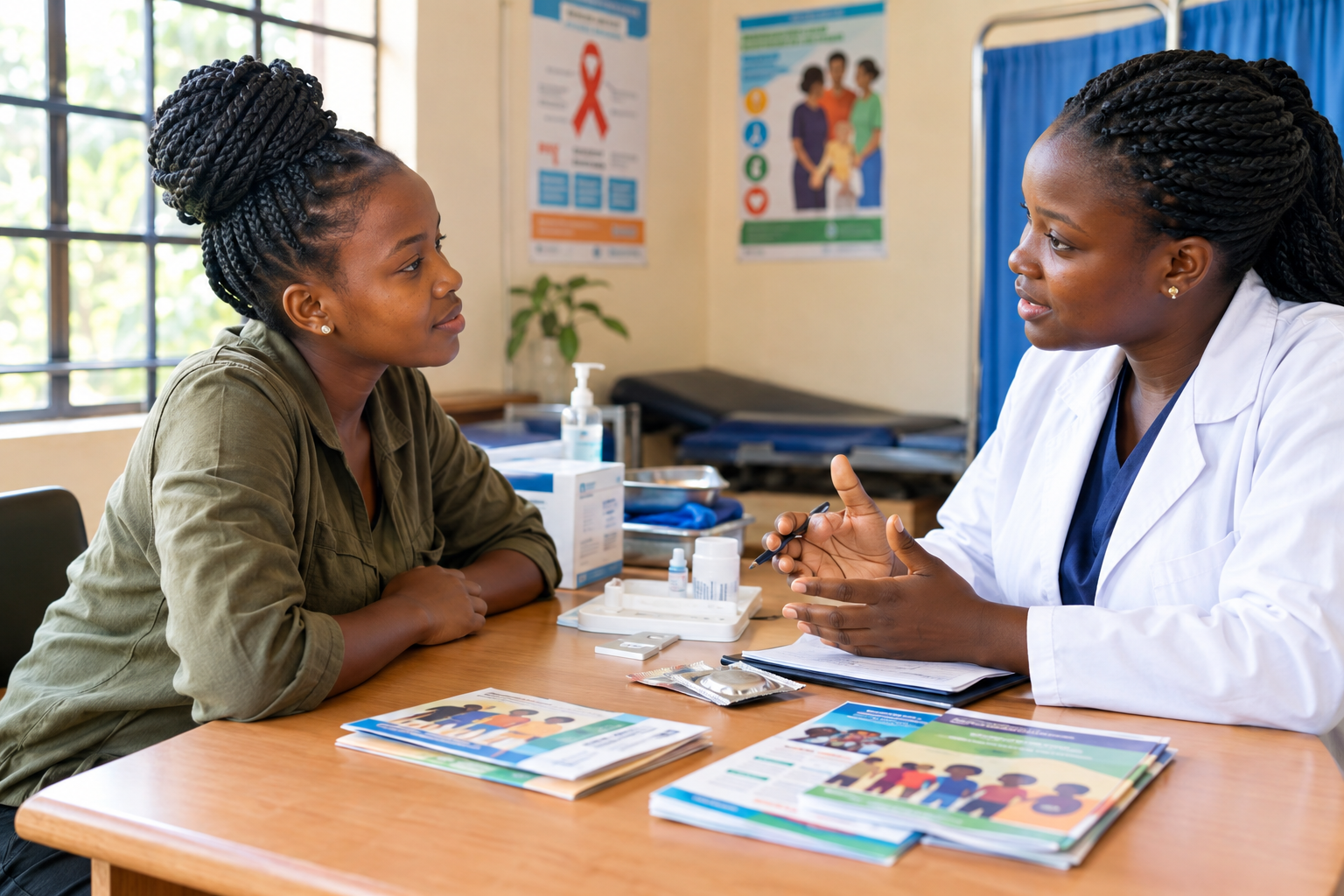
AHF is calling for wider screening for HIV, syphilis and other STIs, particularly among pregnant women and people at increased risk. It is also urging continued access to condoms and other prevention services.
The organisation says HIV and STI services should increasingly be integrated so that people can receive testing, treatment and prevention support during the same visit.
That approach is already reflected in AHF’s work in Kenya, where the organisation operates across 10 counties and provides HIV testing, counselling, condom education and distribution, adolescent and youth programmes and prevention of mother-to-child transmission services.
At some AHF facilities, services include testing for HIV, chlamydia, gonorrhoea and syphilis, as well as STI management and counselling.
Kenya’s declining number of new HIV infections is one of the country’s important public health achievements. But the continuing infections and deaths show why prevention cannot be treated as a finished task.
The latest estimates put new HIV infections at 13,936, down sharply from levels recorded during earlier stages of the epidemic.
AHF argues that maintaining this progress will require a combination of approaches: regular testing, early treatment, condoms, accurate sexual health information and services that people can access without stigma.
The organisation has also highlighted rising concern over syphilis internationally, calling for STI screening to become a routine part of HIV services.
World Sexual Health Day therefore offers a reminder that sexual health cannot be separated from overall health.
Kenya has made progress in its HIV response. The next challenge is ensuring that those gains reach everyone, while closing the remaining gaps in prevention, testing, treatment and stigma-free care.