




HOUSING FINANCE: The housing co-operative is betting on flexible financing, disciplined saving and a new brand to reach Kenyans shut out of conventional mortgages.
By Bradley Nandasaba, Nairobi
For many Kenyans, owning a home does not follow the neat financial path assumed by conventional mortgage products.
A family may buy land first and build years later. Another may put up a foundation, then add rooms as income allows. A small business owner may have the capacity to repay a loan but earn money in cycles rather than through a fixed monthly salary.
It is this gap between how Kenyans actually build wealth and how housing finance has traditionally been structured that You & Me Housing Co-operative wants to exploit.
Formerly known as KUSCCO Housing Co-operative Society, the housing financier has adopted a new identity as it seeks to position itself as a more accessible housing and financial partner.
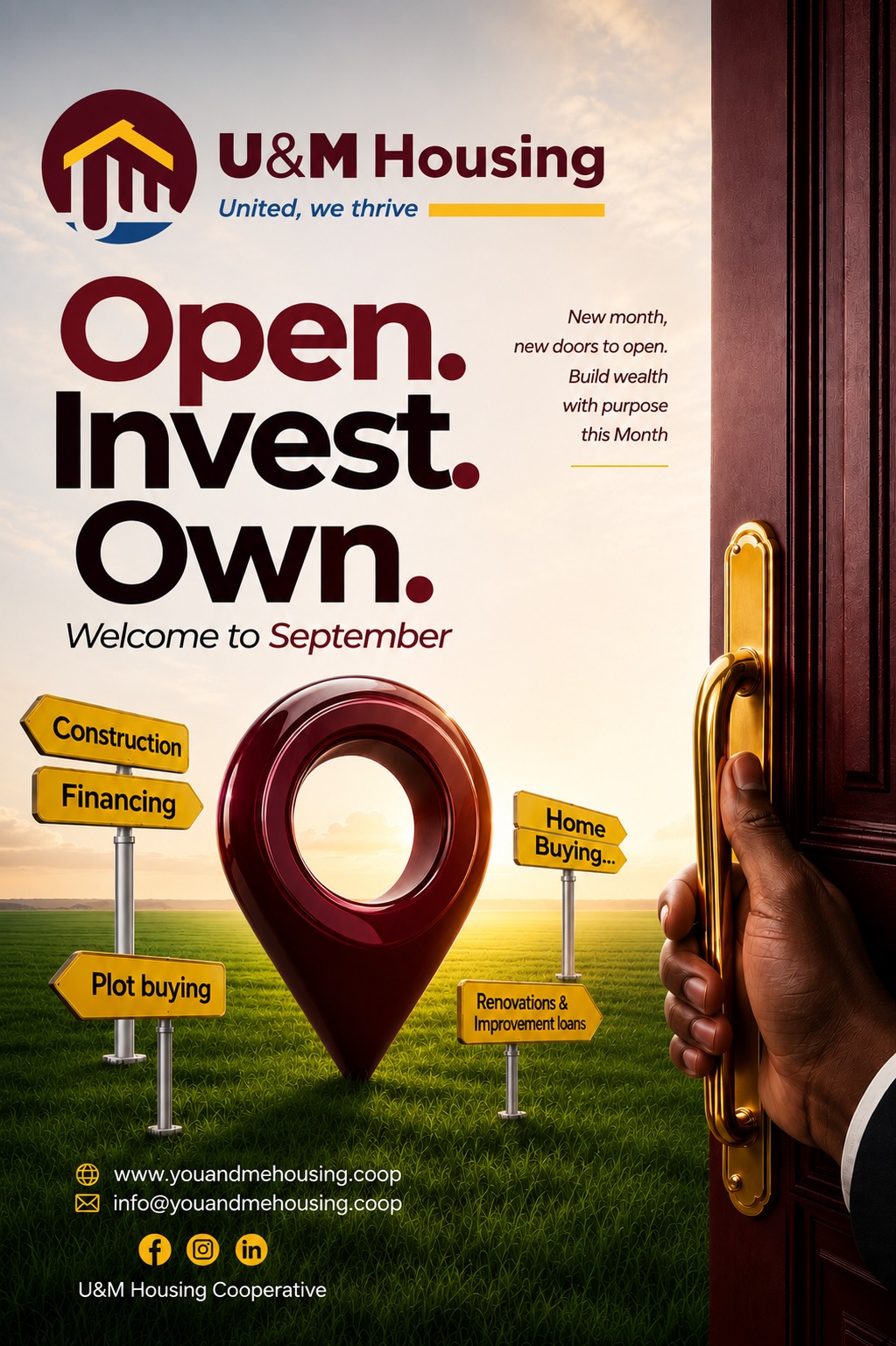
At the centre of the strategy is a shift away from viewing a mortgage as a single transaction and towards treating homeownership as a longer financial journey.
“Housing finance begins before a mortgage application.”
That is the philosophy of Julius Odera, the co-operative’s Chief Executive Officer (CEO), who wants the organisation to help members move progressively from saving to investment, borrowing and, eventually, homeownership.
His ambition is to build You & Me into one of Kenya’s most trusted and accessible housing-finance partners over the next five years.
“We want to reach more Kenyans, expand our products, embrace technology and strengthen our regional presence,” says Odera.
Betting on an underserved market
Kenya’s housing-finance market has traditionally been challenging for households without predictable formal incomes or enough capital to purchase completed homes.
Yet the demand for housing finance extends well beyond the conventional salaried borrower.
Many households acquire land before they have the resources to build. Others construct incrementally, using income from farming, small businesses, professional practice or other irregular sources.
You & Me’s strategy is to meet members at these different stages.
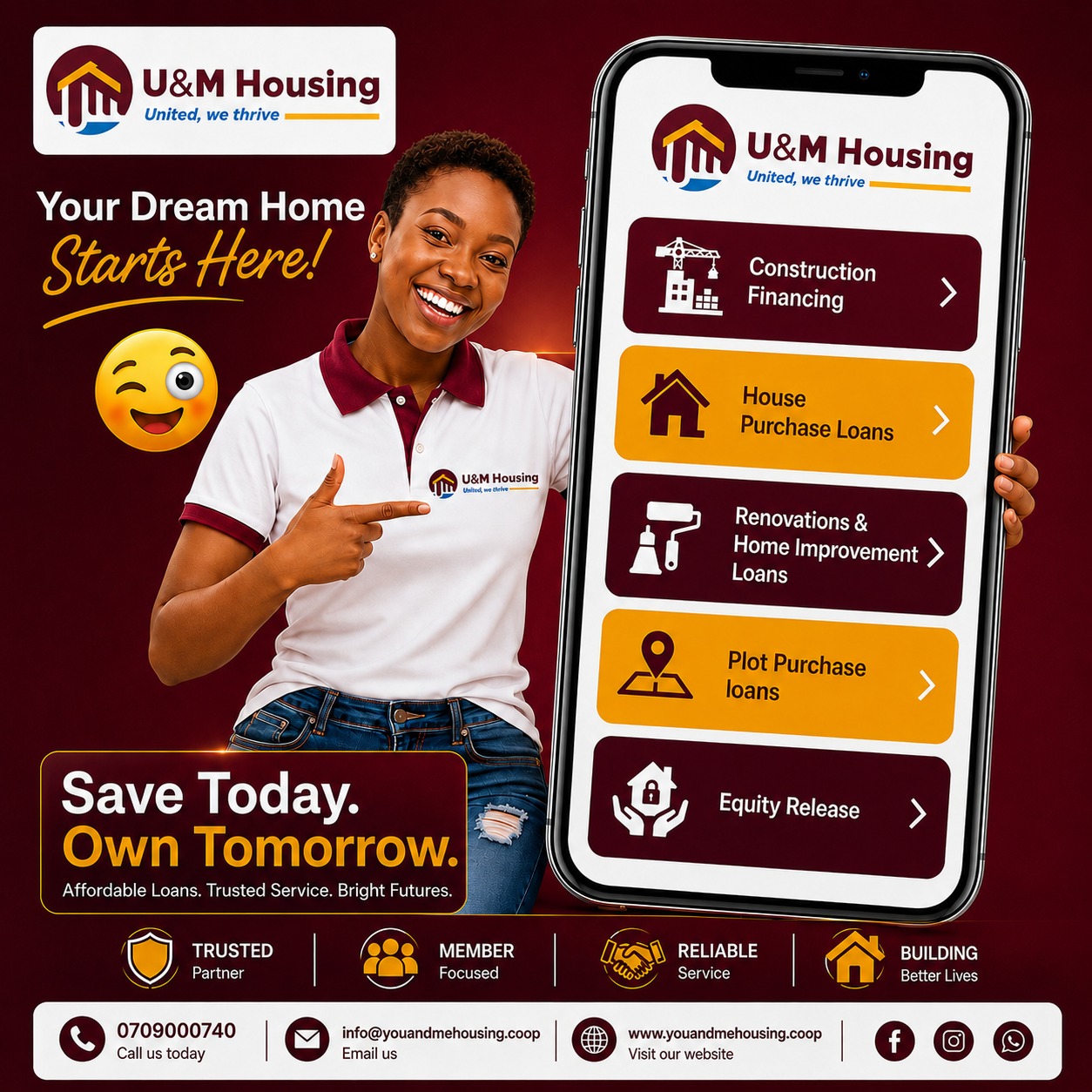
Its financing portfolio includes loans for house purchase, construction, plot purchase, house completion and improvements, alongside financing for commercial developments.
The organisation also offers products including Jumuia Mortgage, Incremental House Construction and Cyclic Mortgage.
The products are designed around different financial circumstances.
Jumuia Mortgage allows members to jointly finance a common project, while Incremental House Construction enables borrowers to finance construction progressively rather than waiting until they have accumulated enough money to complete an entire house.
Cyclic Mortgage is targeted at members whose incomes do not follow a conventional monthly pattern, with repayment cycles that can be structured around agreed bi-monthly or quarterly income patterns.
For Odera, this flexibility is critical.
“A major gap is that traditional housing finance often assumes everyone is ready to buy a completed home and has a regular income,” he says.
“That is not the reality for many Kenyans.”
The business case for saving first
The co-operative’s model does not begin with lending.
It begins with membership and saving.
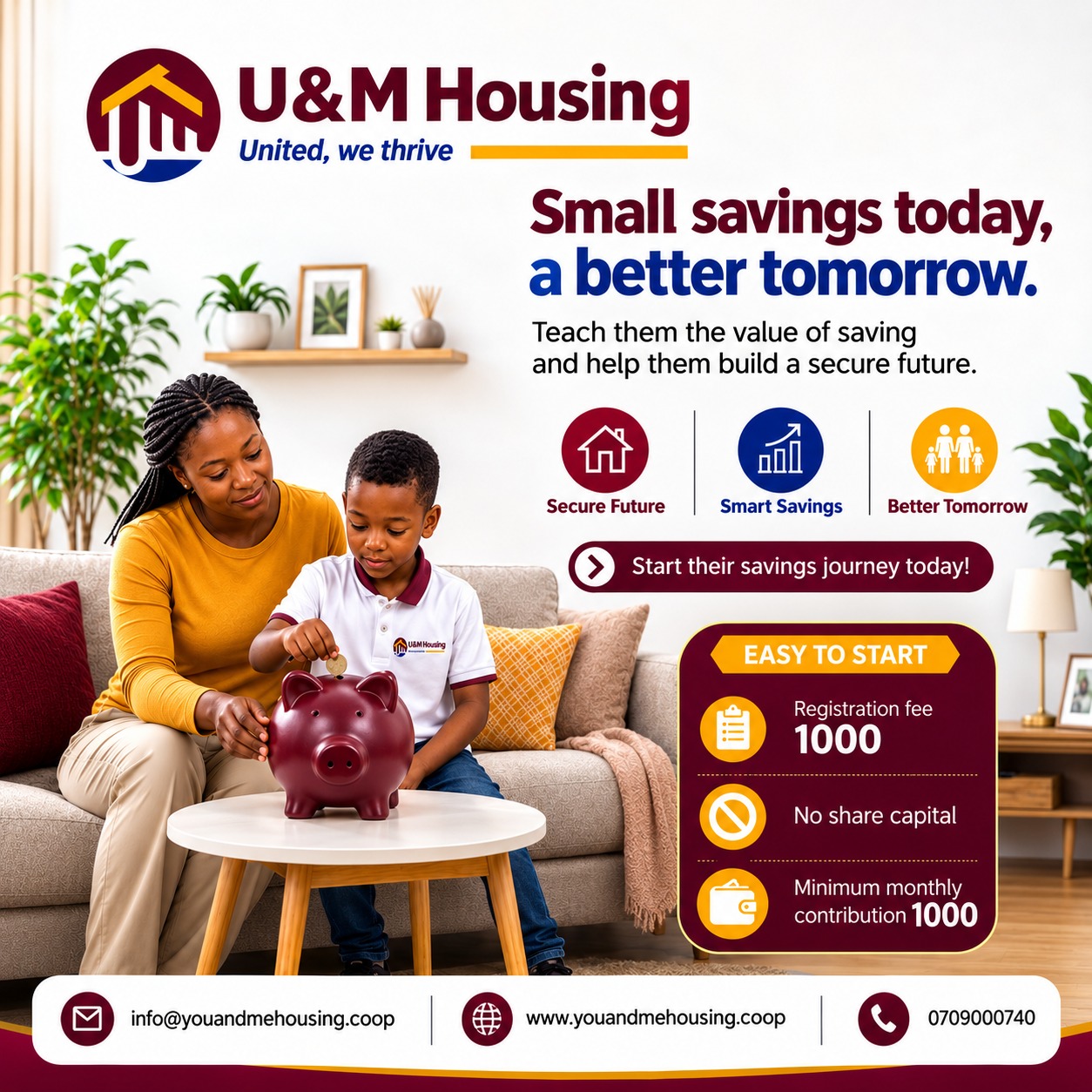
You & Me has individual, joint, corporate, diaspora and junior-saver membership categories, creating entry points for people who may be years away from buying or constructing a home.
The strategy is to bring prospective homeowners into the financial system early, allowing them to build savings and borrowing capacity before taking on a major housing loan.
For the organisation, this also creates a longer relationship with the customer.
Instead of acquiring a member only when they need a mortgage, the co-operative can engage them through different stages of their financial and property journey.
“You do not need to be ready to buy a house today to begin your homeownership journey,” Odera says.
The approach also places greater emphasis on financial education.
Members are encouraged to understand affordability, budgeting, debt management and property acquisition before committing themselves to long-term borrowing.
The intended journey is straightforward: Join. Save. Borrow. Build or Buy. Repay. Own.
Rebranding for a new market
The shift in business strategy comes alongside a significant change in identity.
The organization’s move from KUSCCO Housing Co-operative Society to You & Me Housing Co-operative is intended to create a more distinctive housing brand while preserving its institutional experience.
Odera says the rebrand was driven partly by a mismatch between what the organisation had become and how it was perceived.
“We had experience, capabilities, products and a growing membership, but our identity did not fully reflect our independence or housing ambition,” he says.
The new name is built around partnership.
“You” represents the member and their aspiration to own property. “Me” represents the co-operative standing alongside that member.
The organisation says the change does not alter its commitment to members or its underlying purpose.
Instead, it is intended to provide a clearer platform from which to expand its housing-finance proposition.
For a financial institution, however, changing an established identity can be complicated.
Existing members need reassurance that their investments, relationships and obligations remain intact.
Odera says managing that transition while maintaining trust has been one of the organisation’s biggest challenges.
“True transformation goes beyond logos; it improves member experience while protecting the trust already built,” he says.
Pricing the journey
You & Me’s mortgage offering includes financing at 12 per cent per annum on a reducing balance, with repayment periods of up to 15 years, according to its product information.
The reducing-balance structure means interest is calculated against the outstanding loan principal, so the interest component declines as the borrower pays down the debt.
For members, longer repayment periods can spread the cost of borrowing and improve affordability.
For the co-operative, however, expanding access to housing finance comes with the need for disciplined credit assessment and risk management.
Odera says the institution has to strike a balance between making finance accessible and protecting its long-term financial sustainability.

Responsible lending, he argues, is therefore central to the model.
The objective is not simply to increase the volume of loans disbursed, but to ensure members can sustain repayments and ultimately retain the assets they have financed.
A CEO shaped by housing insecurity
Odera’s own background gives the strategy a personal dimension.
Raised in Kamser Seka, Karachuonyo, in a fishing community, he says he grew up seeing how Harambee, Chamas and co-operatives helped communities mobilise resources.
He walked barefoot to school and later dropped out after Class Eight because of financial difficulties.
He travelled to Nairobi and trained as a mechanic before returning to education, eventually pursuing finance at university.
His professional career has since included accounting, fund management, co-operative management, risk management and project management.
But he says the most important lesson came from his parents.
He watched them struggle to build a semi-permanent home and came to associate housing with security and dignity.
“When a member says, ‘Julius, I have saved for five years,’ I see my father’s face, not a file.”
That experience continues to shape his leadership philosophy.
For him, members’ savings are not simply financial figures. They represent years of sacrifice and expectations.
Five years to prove the model
Odera’s five-year ambition is ultimately a test of whether You & Me can translate its new identity into measurable growth and member outcomes.
The co-operative plans to expand its reach, strengthen its product portfolio, embrace technology and increase its regional presence.
But the CEO says success should not be judged only through conventional corporate metrics.
The real measure, he argues, is the number of families that move from renting to owning, from informal saving to investment and from financial uncertainty to greater confidence.
“If more families can say, ‘You & Me helped me own my home,’ we will have succeeded,” he says.