



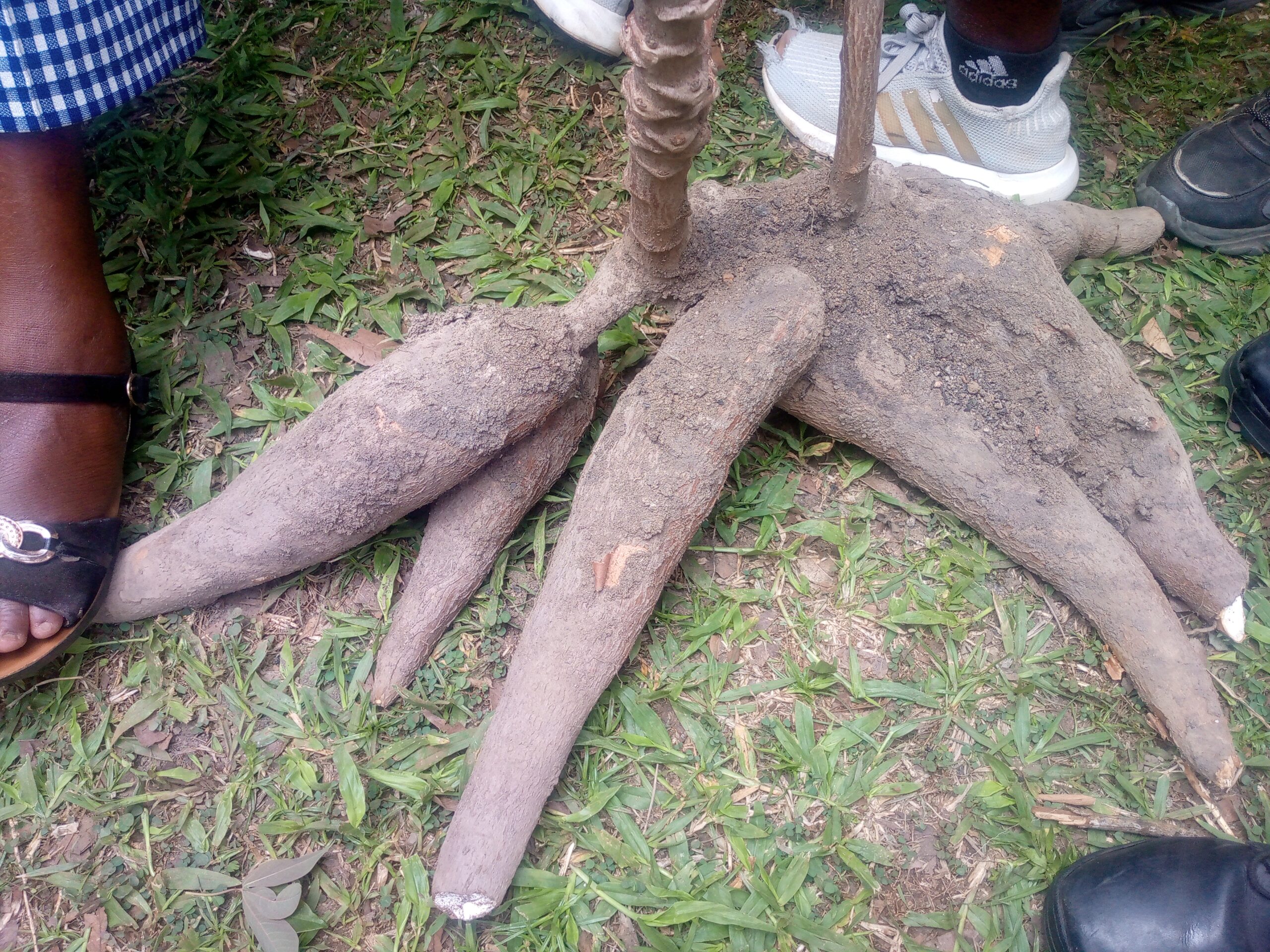
By Victoria Magar, Busia
A new cassava variety (MH96) in Busia County is changing how farmers grow, process, and profit from the staple crop.
Developed by the Kenya Agricultural and Livestock Research Organization (KALRO) in Alupe, the improved variety is winning over farmers, processors, and nutritionists for its high yields, disease resistance, and nutritional potential.
Martha Aroni, an agronomist specialising in cassava production, said the MH96 variety is superior to local varieties due to its environmental benefits and low cyanide content.
” It is the best and it has no side effects on human beings because it can be used for value addition to produce a variety of food products,” said Aroni.
The GMO cassava is important since once uprooted another plant can be planted at the same place and it will do very well and increase soil health.
“The improved variety is highly resistant to diseases, which is a significant relief for farmers who often struggle with pest and disease outbreaks that threaten cassava yields,”~ Aroni
Aroni further explained that the variety is also very good to the environment since no fertilizer is needed and all the pests and diseases are controlled so one will not need the pesticide.
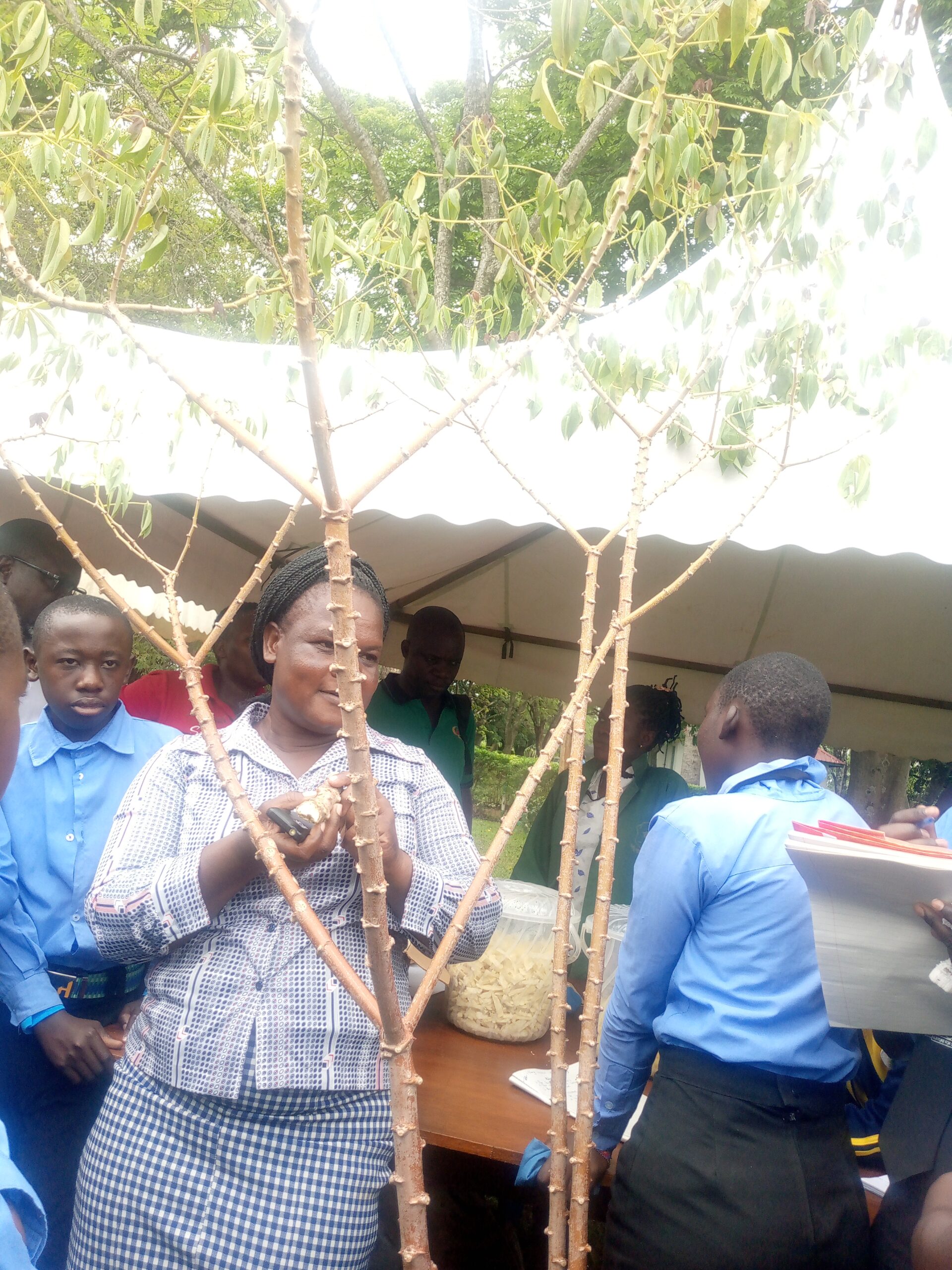
”The improved variety is highly resistant to diseases, which is a significant relief for farmers who often struggle with pest and disease outbreaks that threaten cassava yields,” she said.
The high productivity of MH96 is another compelling reason why farmers are embracing it. Compared to the local cassava varieties, MH96 yields more per acre, ensuring better returns for farmers.
According to Aroni, the variety matures early, allowing farmers to harvest in a shorter period, which is crucial in ensuring food security and continuous supply to the market.
Beyond its food benefits, MH96 cassava leaves have medicinal properties, adding an extra layer of value to this already remarkable variety. The medicinal uses of the leaves provide an opportunity for farmers to diversify their income streams, as they can be used in herbal remedies and traditional medicine.
Margret Otote, a farmer from Agorom who has been cultivating MH96 cassava shared his experience, expressing great satisfaction with the variety.
“MH96 is the best variety I have ever planted. It has no side effects on humans, and it can be used for value addition to make different products,” Otote said.
The versatility of MH96 allows it to be processed into flour, animal feed, and other value-added products, making it an economic powerhouse for farmers looking to maximize profits.
She further added and said that with all these advantages, MH96 is poised to transform cassava farming in Kenya. The improved variety ensures food security, boosts income for farmers, and provides safer and more nutritious food options for consumers. As more farmers embrace MH96, the future of cassava farming in the country looks brighter than ever.
On the other hand, Michael Onyango, a processor, said GMO cassava has been a game changer. It’s more resistant to pests and diseases, which means they receive higher-quality roots with less spoilage.
”That directly improves our efficiency and output, whether we’re making flour, starch, or ethanol, the higher starch content in MH96 GMO varieties, in particular, helps reduce processing time and cost.”
He added and said that some customers still have questions about the safety and long-term effects of GMOs,but from a production standpoint, GMO cassava has improved their yield consistency, which is crucial for planning and scaling operations.
Teresia Achola who is a nutritionist in Busia County said that MH96 GMO cassava has the potential to address nutritional deficiencies, especially when it’s biofortified with nutrients like vitamin A. This is critical in regions where cassava is a staple food and malnutrition is common like busia.
The modified varieties still provide the same caloric value and fiber but can now offer additional nutrients.
”Current studies show that GMO cassava approved for consumption is safe. The key is regulatory oversight to ensure proper testing. As long as it’s developed responsibly, the health benefits outweigh the concerns especially when fighting vitamin A deficiency and food insecurity.”