



By Nelson Musungu, Bungoma
Farmers in Western Kenya are increasingly embracing modern agricultural technologies and sustainable practices to enhance food production and build resilience against climate change.
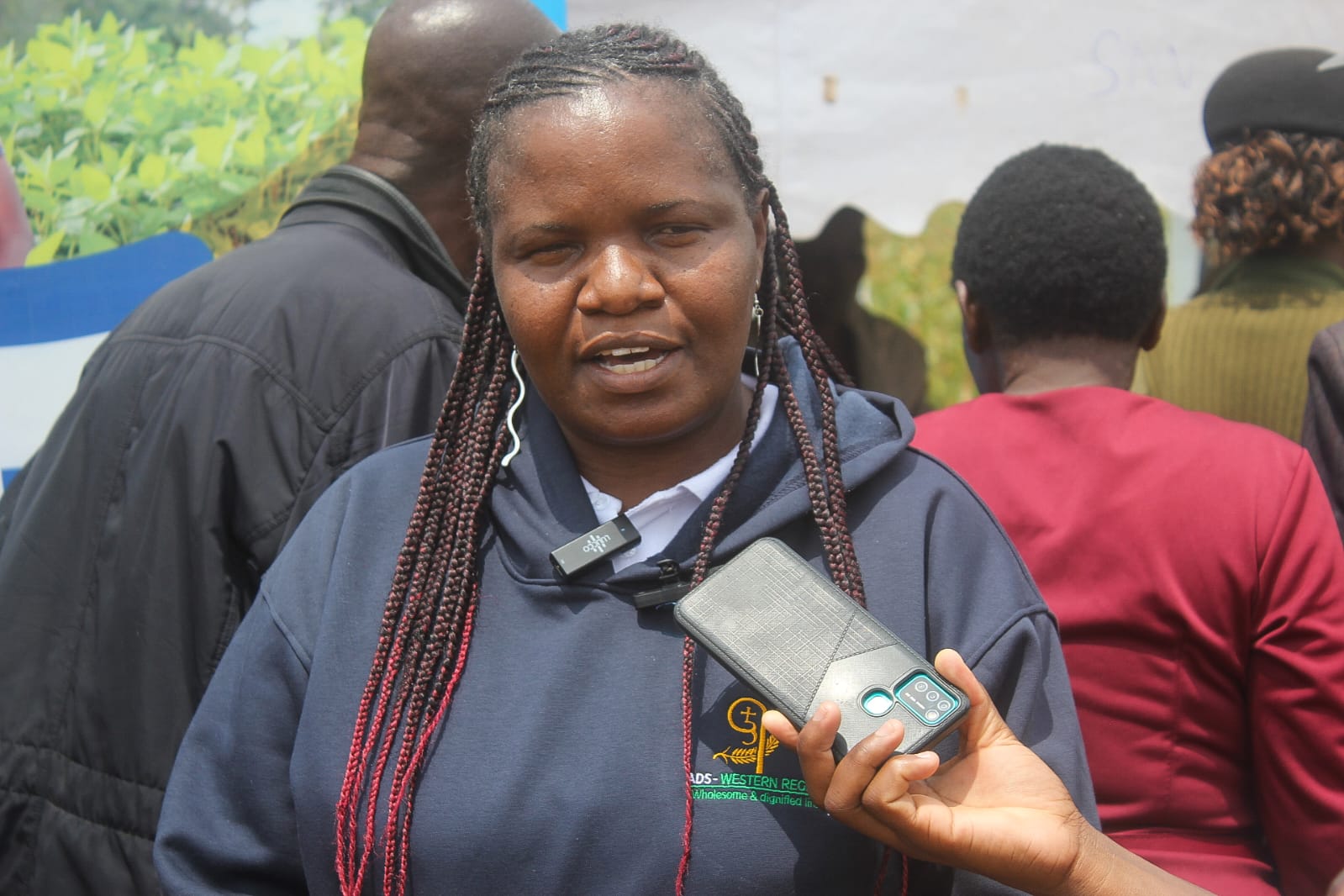
Isabella Kasaya, Head of Programs and Partnerships at the Anglican Development Services (ADS) Western Region, says the organization is working closely with local communities to promote climate-smart agriculture and improve livelihoods across the region.
“We’re collaborating with farmers across Western Kenya to implement sustainable farming techniques that not only improve productivity but also address the pressing challenges posed by climate change,” said Kasaya.
ADS is currently running several agricultural development projects in multiple counties, equipping farmers with modern, eco-friendly methods to cope with shrinking farmland and increasingly unpredictable weather.
“With limited land availability, we’re training farmers to make the most of small spaces using methods like kitchen gardening and conical gardens,” she added.
Conical gardens/vertical, layered planting structures allow farmers to grow multiple types of vegetables in compact spaces such as home compounds or school grounds. This approach has proven especially effective in areas with poor soil or land scarcity.
Beyond maximizing land use, ADS is helping farmers improve soil fertility through composting and bio-fertilizer production. According to Kasaya, these organic solutions not only lower farming costs but also increase yields while protecting the environment.
“We’re teaching farmers to make their own organic fertilizers. It’s a cost-effective and sustainable way to enrich the soil and boost productivity,” she explained.
ADS is also focusing on the economic side of farming. Through the formation of cooperatives, farmers gain access to better markets and can explore value addition to increase income.
“Cooperatives enable farmers to market their produce collectively and even engage in processing or packaging, which adds value and boosts their earnings,” Kasaya noted.
To support long-term impact, ADS aligns its programs with national and county policies, and has plans to establish training and resource centers across the region.
“These hubs will serve as learning and demonstration sites for farmers to interact with new technologies and best practices in climate-resilient agriculture,” she said.
Recognizing the importance of involving the next generation, ADS has partnered with schools to introduce agricultural education through 4K Clubs. Young learners are taught practical, sustainable farming techniques which they can apply at home.
“Engaging youth is critical for the future of agriculture. Many schools now have thriving gardens, and some use the produce to support feeding programs or raise school funds,” Kasaya shared.
Indeed, several schools have turned their school gardens into income-generating and nutrition-boosting ventures, highlighting the program’s success.
Bungoma Governor Kenneth Lusaka encouraged residents to view agribusiness and value addition as pathways to economic empowerment.
“Agriculture remains the backbone of our economy. I urge young people to embrace agribusiness and tap into opportunities across the entire value chain,” said Lusaka.
Bungoma’s County Executive Committee Member (CECM) for Agriculture, Engineer Herbert Kibunguchy, also praised the partnership between ADS, the county government, and local schools, acknowledging its role in boosting food production and empowering communities.