



By Rodgers Omondi, Busia
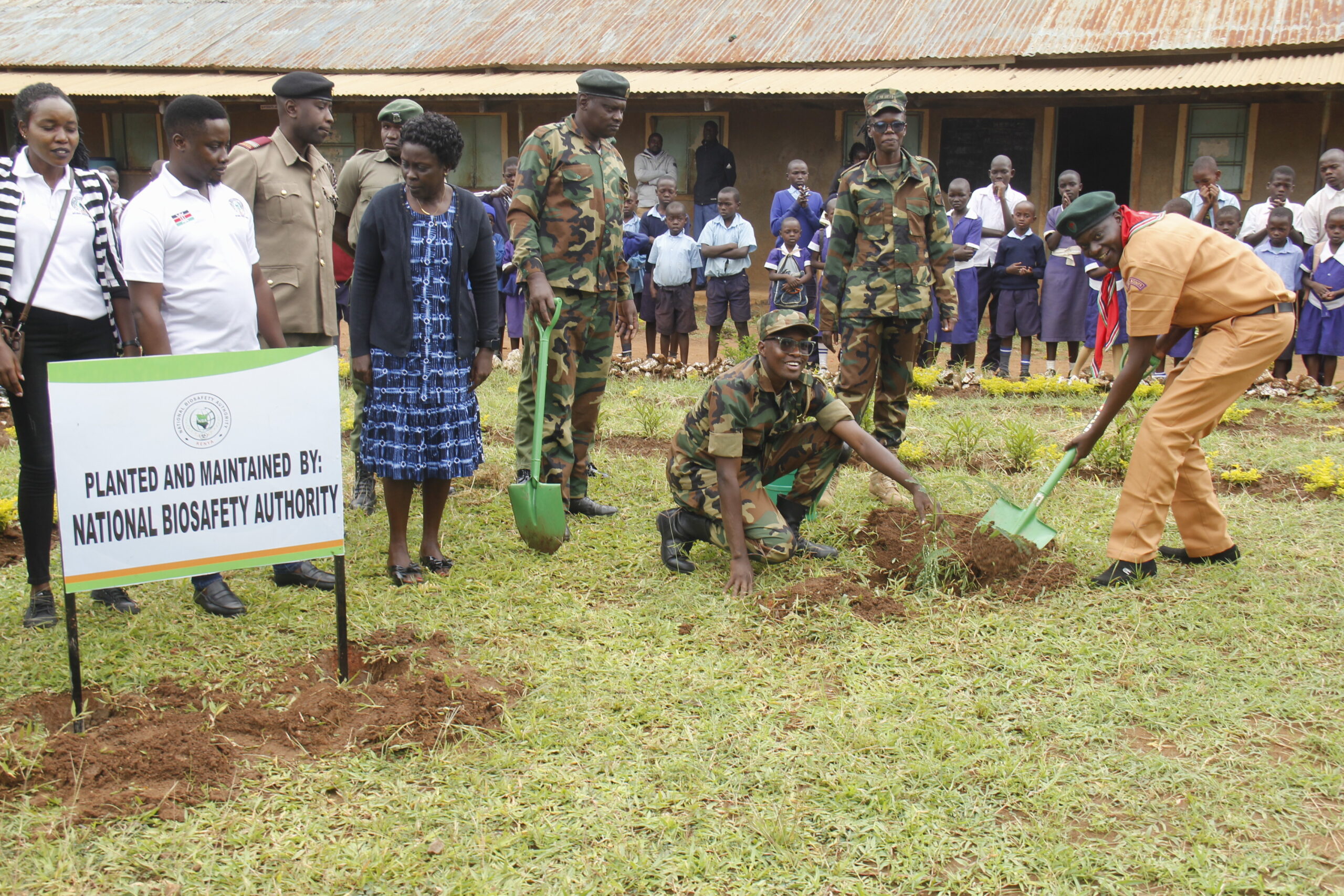
The National Biosafety Authority (NBA) has rolled out a Biosafety Tree Gardens Program in schools and institutions as part of efforts to promote environmental conservation and increase Kenya’s tree and forest cover.
Speaking during the planting of 5,000 trees in various schools across Busia County, NBA Regional Lead Dr. Joseph Odongo said the initiative goes beyond tree planting by fostering environmental learning among students.
“We want learners to gain knowledge on how to care for the environment from an early age so that they grow up understanding its importance. The current generation should learn not only the names of trees but also their value in the ecosystem,” he said.
Dr. Odongo added that the program includes labeling tree species with their scientific, common, and local names, alongside information on their cultural and medicinal significance. This approach, he noted, will enrich learning while promoting environmental stewardship.
The initiative has already begun in three schools in Busia: Busende Primary and Junior Secondary School (1,500 trees), Muyafwa Primary and Junior Secondary School (2,000 trees), and St. Mary’s Mundika High School (1,500 trees). The trees include indigenous, exotic, fruit, and medicinal species.
“We want more schools to adopt this model so that learners can grow up nurturing and caring for the environment,” Dr. Odongo emphasized.
He further highlighted that the program contributes to tackling climate change, with support from stakeholders such as the Forestry Department, teachers, learners, and administrators to ensure continuity and proper monitoring.
Busia Municipality Assistant County Commissioner, Calvin Monare, lauded the program, saying it will boost Kenya’s goal of planting 15 billion trees by 2032.
“Through such initiatives, we will achieve our target. We are encouraging learners, teachers, and the public to take part in tree adaptation programs to improve survival rates,” he said.
Busia Sub-County Forester Seth Onyango noted that the county currently has 8.3% tree cover, far below the 30% target set for 2032.
“This calls for more commitment in planting and maintaining trees. We will also work closely with schools to ensure the trees survive, while encouraging learners to practice tree planting at home,” Onyango said.
School administrators also welcomed the initiative. Muyafwa Secondary School Principal, Alasa Keneth, said the project will not only benefit learners but also the ecosystem.
“These trees will provide shade, improve our diet through fruit trees, and create shelter for birds. Learners will experience the environmental change here and replicate it at home,” he said.
St. Mary’s Mundika High School Principal, Bernard Nyongesa, echoed similar sentiments, noting the value of exposing learners to diverse tree species.
“We are always ready to plant trees when we get seedlings. Our agriculture students have been planting trees as part of their projects for the past two years, but we still have room for more. This program will greatly enhance our efforts,” he said.