



By Faith Anene, Kakamega
Universities and other institutions of higher learning have been challenged to establish tree-growing and aftercare programmes to restore degraded landscapes and promote environmental conservation.
Education Principal Secretary Beatrice Inyangala said universities should take a leading role in environmental protection by instilling a culture of tree growing and conservation among students, staff and communities surrounding their campuses.
Inyangala said tree growing should not be treated as a one-day activity but as a continuous responsibility requiring commitment, proper maintenance and collective action.
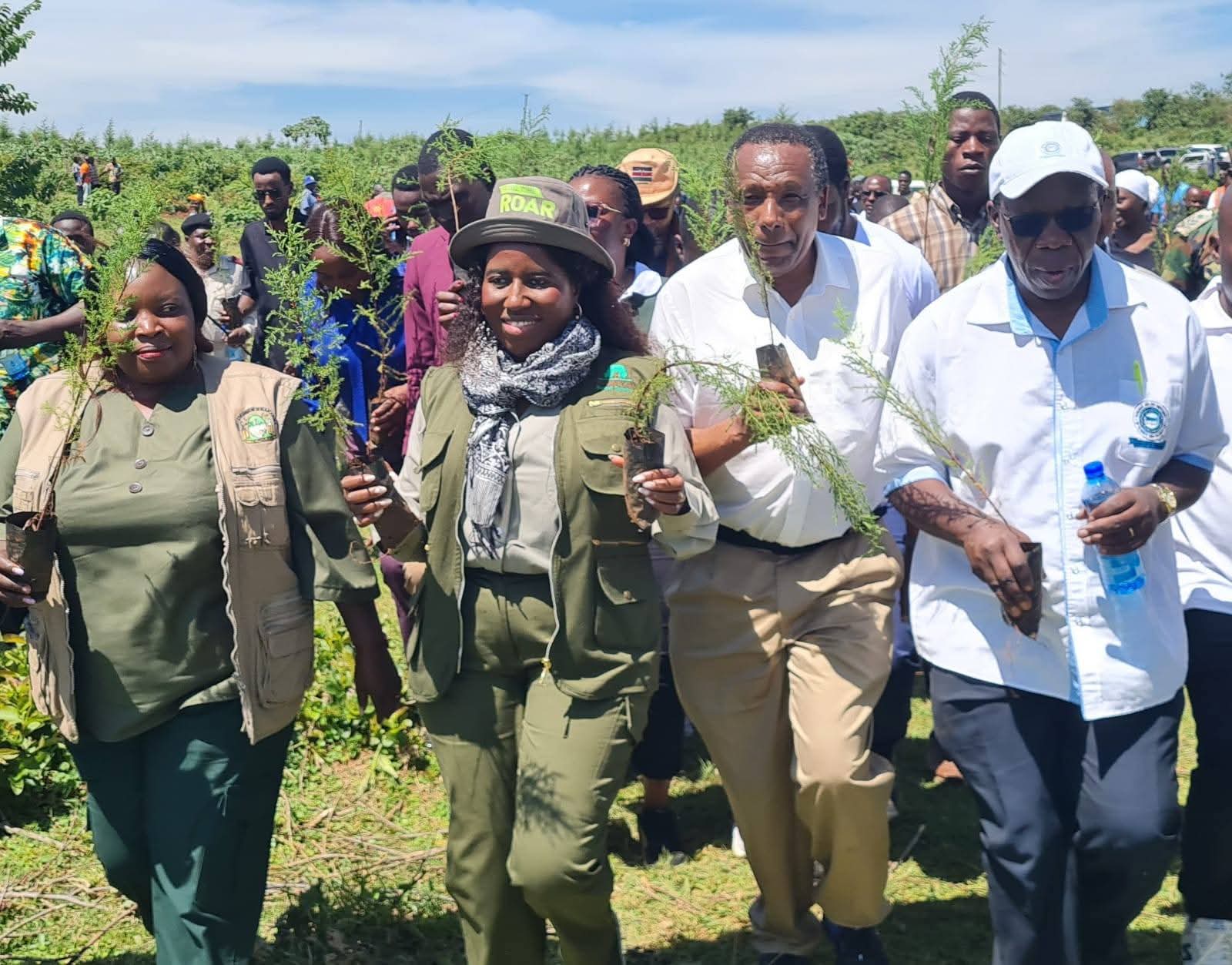
Speaking during a tree-planting exercise at Kakamega Forest in Senyende, Shinyalu Constituency, during national Environment Day celebrations, the PS urged universities to ensure seedlings survive and contribute to restoring the country’s tree cover.
“I therefore challenge our universities, the surrounding communities and all stakeholders to take ownership of the trees we are planting here today,” she said.
“Let every university establish a tree-growing and aftercare programme across the country. Let every student understand the importance of protecting our environment, and let every community, beginning with this one in Shinyalu, see itself as a custodian of its natural resources.”
Inyangala said the benefits of tree-growing initiatives should extend beyond university campuses to farms, water catchment areas and the livelihoods of communities surrounding the institutions.
She said environmental conservation was a shared responsibility requiring collaboration between government agencies, learning institutions, local communities and other stakeholders.
The PS linked the initiative to the government’s campaign to grow 15 billion trees, saying the target would require sustained efforts to restore degraded landscapes and increase Kenya’s tree cover.
The campaign seeks to restore 10.6 million hectares of degraded landscapes and raise the country’s tree cover to 30 per cent by 2030.
Inyangala said achieving the target would require Kenyans to embrace environmental conservation as a collective responsibility rather than leaving the task to government agencies alone.
She cited the legacy of the late environmentalist Professor Wangari Maathai, whose work through the Green Belt Movement demonstrated how tree planting could support environmental restoration, community empowerment and sustainable development.
“Professor Wangari Maathai taught us that environmental conservation begins with individual responsibility and collective action,” she said.
Her remarks came amid renewed attention to the protection of Kakamega Forest, a vital natural resource in western Kenya that supports biodiversity and helps maintain the region’s ecological balance.
The forest provides a habitat for diverse plant and animal species and remains an important environmental asset for surrounding communities.
Inyangala said involving students and local communities in tree-growing programmes would help nurture a generation that understands the importance of protecting natural resources.
She urged institutions to establish practical measures to monitor planted trees, replace those that fail to survive and ensure environmental initiatives deliver lasting results.
Kakamega County Executive Committee Member for Environment, Water and Natural Resources Penninah Mukabane, who attended the event on behalf of Governor Fernandes Barasa, called on the national government to prioritise development projects in Shinyalu in recognition of residents’ efforts to protect the forest.
Mukabane praised residents for their role in conserving the forest, saying their contribution should be recognised through development initiatives that improve local livelihoods.
“I want to recognise the people of Shinyalu for protecting the forest. There is no other county that has conserved its forest as Kakamega County has, and the people of Shinyalu are number one in protecting it,” she said.
She appealed to national government officials to give Shinyalu priority when planning development projects.
“When we talk about development, kindly prioritise Shinyalu Sub-County,” Mukabane said.