



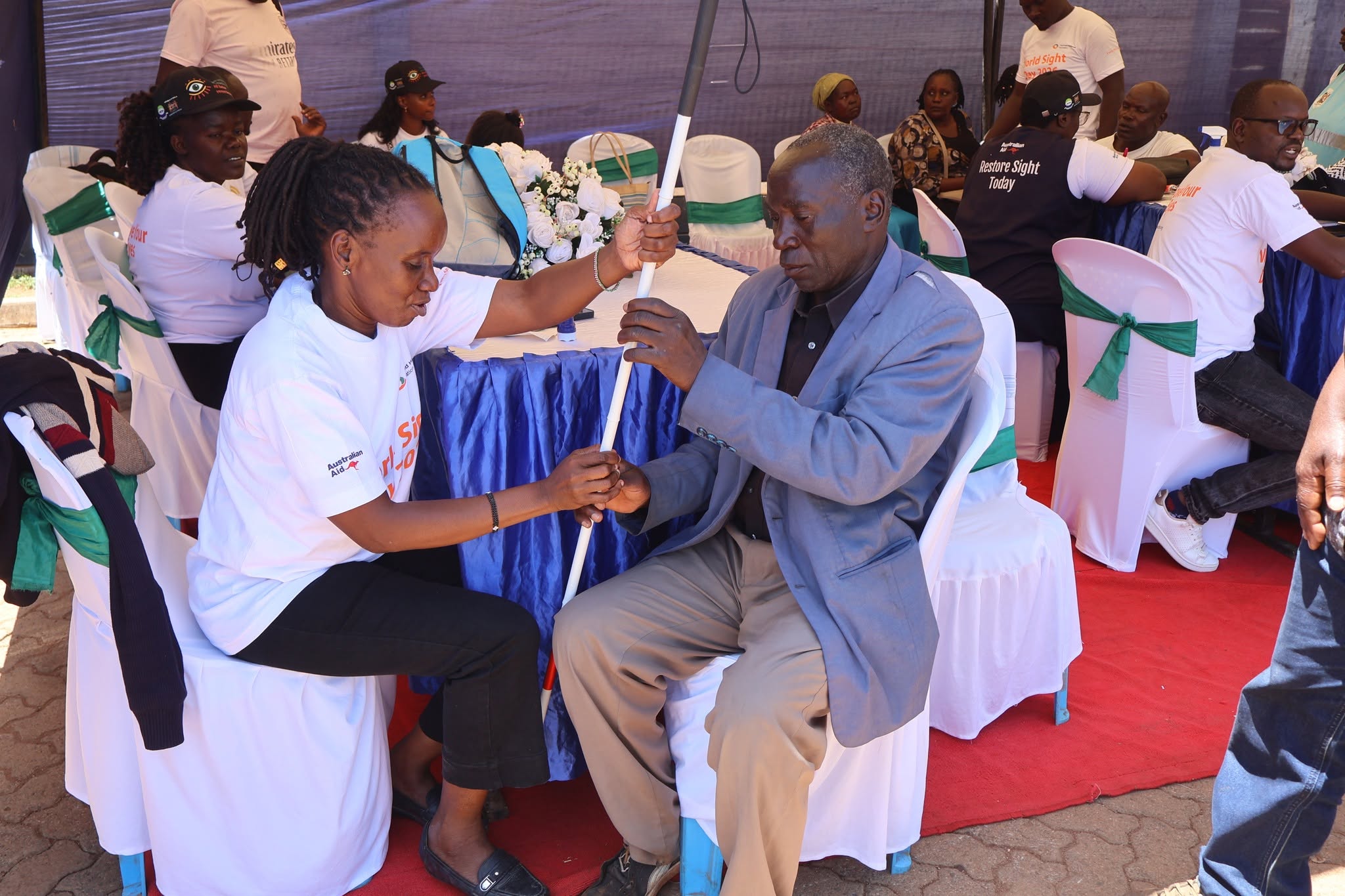
By Rodgers Omondi, Busia
More than 5,000 people in Busia County are living with blindness related cases caused by cataracts, with delayed eye screening and detection cited as a major challenge in preventing avoidable sight loss.
Busia County Eye Coordinator Harriet Kavere said cataracts account for about 43 per cent of population, calling on residents to seek early screening and treatment.
Speaking during an eye clinic held at Busia town bus park to mark World Sight Day, Kavere said the exercise was aimed at screening residents and sensitizing them on the importance of maintaining good eye health.
“We are carrying out eye screening and sensitizing the public on eye health. Close to 2.2 billion people in the world have eye problems, with 90 per cent of these cases being preventable. The main problem in our county is cataract, which accounts for about 43 per cent of the population, with 5,000 people experiencing blindness due to cataracts,” she said.
Kavere said late detection and screening remained a major cause of blindness, particularly for conditions such as glaucoma, which can progress without noticeable pain or symptoms.
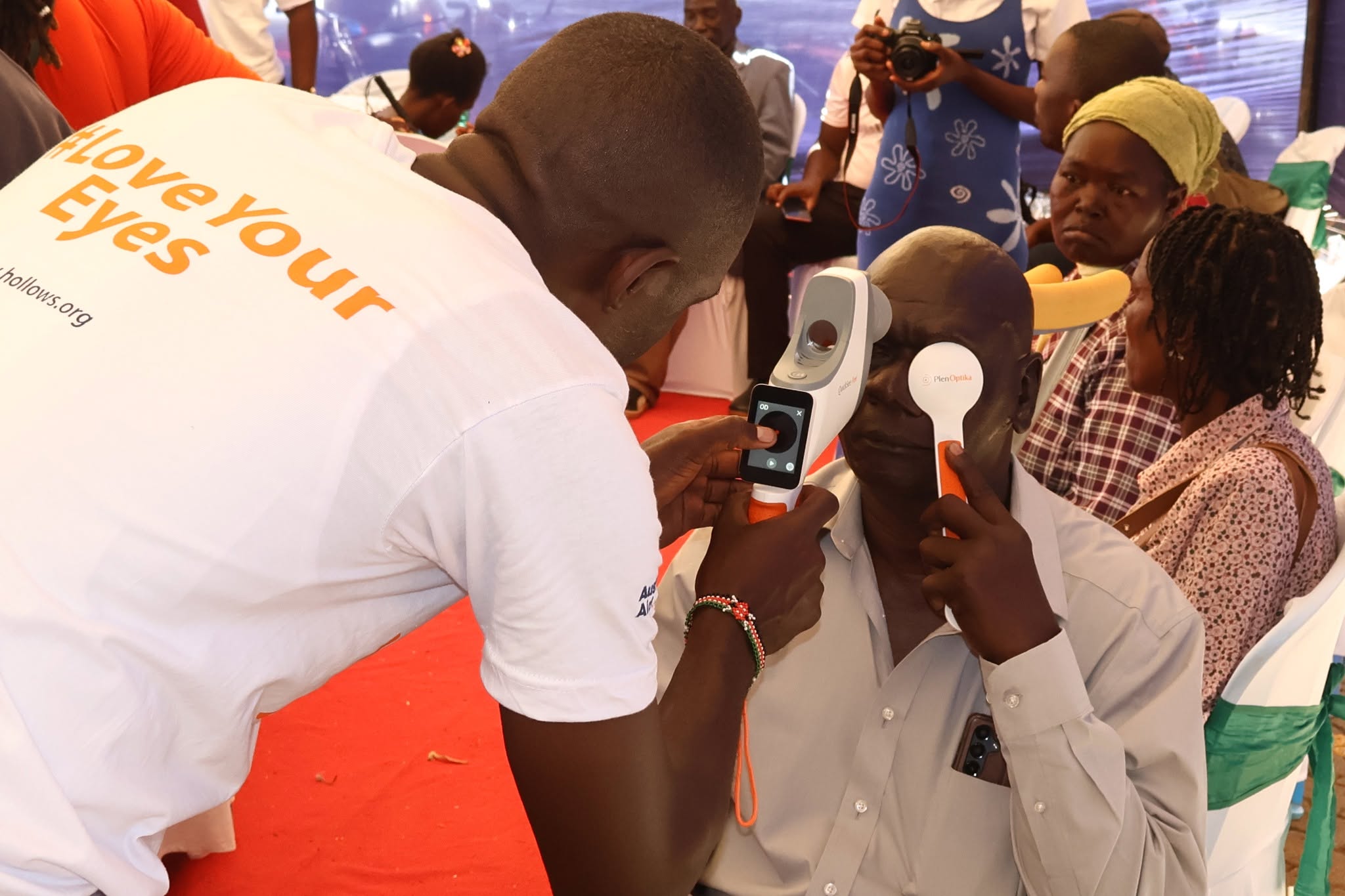
“Glaucoma has also affected many people in the county because a person does not experience any pain, but it can result in blindness. We are calling on the public to undergo early screening for better treatment,” she said.
She added that the eye screening programme was also targeting drivers amid concerns over road accidents, noting that motorists found with vision problems would be referred for treatment.
“We are also focusing on drivers because we have experienced an increase in accidents on our roads. If we find them with any challenges, they will be treated, and this guarantees our safety on the roads,” Kavere said.
She urged residents to seek treatment from public and specialised health facilities before eye conditions become severe and difficult to manage.
“Our target was 300 people, which has been achieved. The challenge we experience in our facilities is that many people come when their condition has worsened, making it difficult to restore their sight. We have eye services in all our sub-county hospitals, and people should seek these services,” she said.
Optician Evans Apondi said people aged 50 years and above were among those most affected by eye problems in the county, although children below seven years were also presenting with eye-related conditions.
“Cataract has remained the main eye disease affecting our people, but it can be treated. We are calling on the community not to seek traditional methods of eye treatment, but to seek services from specialists to prevent the increasing number of people developing blindness,” Apondi said.
He also urged residents to use eye protection at home and avoid exposure to smoke, warning against myths linking eye diseases to traditional or cultural causes.
“Eye problems are real and are not associated with any tradition or cultural calamity. Let us seek treatment for better outcomes. Let us also reduce our exposure to smoke in our homesteads,” he said.
Virginia Ongala, a beneficiary of the eye camp who lives with sight disability, said she received a disability card free of charge and appealed to the government to support persons with disabilities in securing employment after completing their education.
“I was born well, but after two weeks I became sick and lost my sight. I have lived with the situation up to today, and I am now in college. I have been using a white cane that I was given while in school. I came to seek a disability card, and I have received the service free of charge,” she said.
Another beneficiary, Peter Egesa, said he received glasses at the clinic after experiencing difficulties reading.
“I have been issued with glasses today, which will help me to read. Tears have been coming out of my eyes whenever I try to read or when exposed to too much light. The big turnout clearly shows that many people are experiencing eye problems,” Egesa said.