



By Faith Anene, Kakamega
The government has intensified efforts to educate farmers and the public on modern farming technologies as part of a broader strategy to boost agricultural productivity and food security.
The initiative is being spearheaded by the National Biosafety Authority (NBA) in collaboration with other state agencies through a joint public awareness campaign dubbed the “One Government Approach.”
The programme seeks to increase public understanding of modern biotechnology while addressing misinformation and disinformation surrounding genetically modified organisms (GMOs) and other emerging technologies.
The Authority has held awareness sessions in Lurambi Constituency that brought together agriculture and biotechnology students from Bukura Agricultural College, lecturers, and local farmers.
The exercise is being conducted under the theme “Enhancing Public Awareness and Regulation of GMOs in Kenya” and will culminate in a two-day public engagement forum scheduled for Thursday and Friday at the Kenya Medical Training College (KMTC) in Mumias East Sub-County.
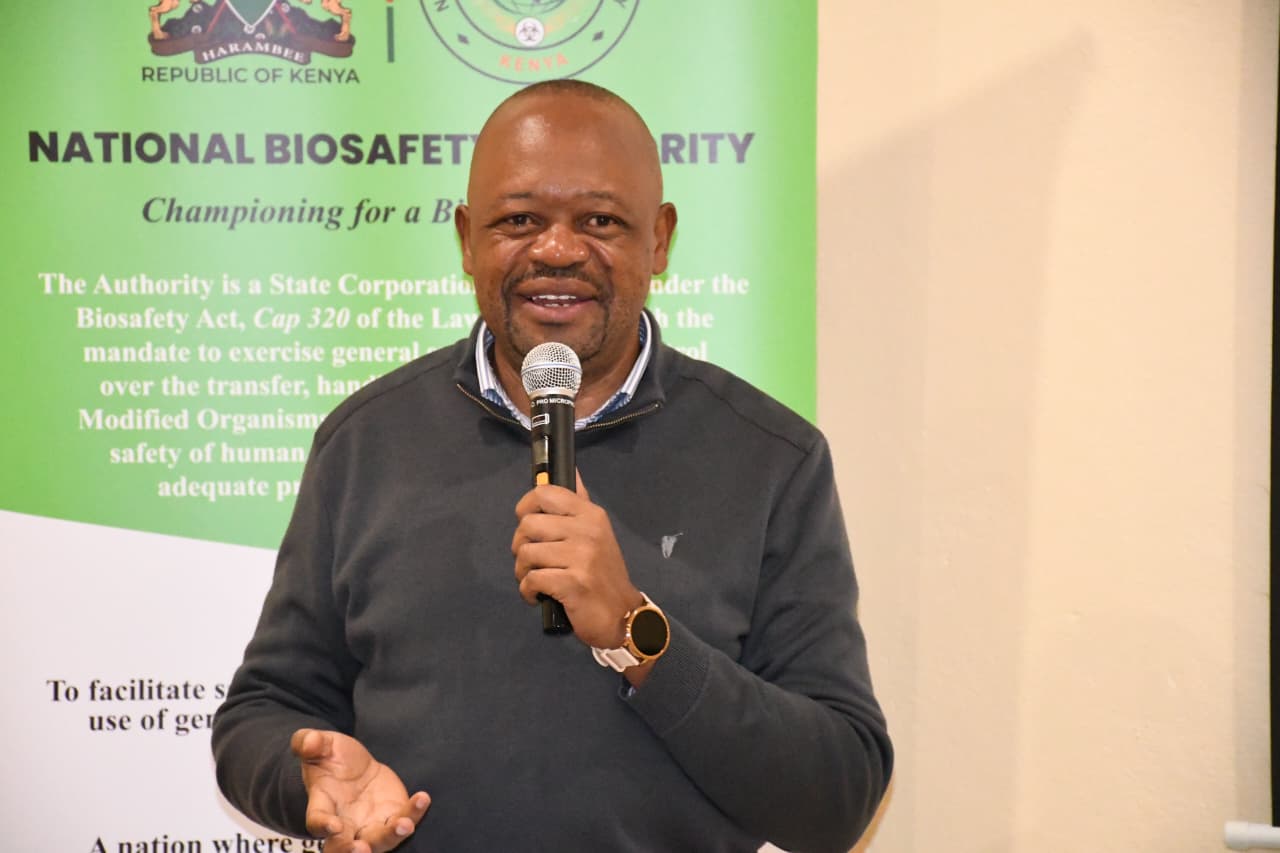
NBA Board Chairman David Wamatsi said misinformation continues to shape public perceptions of biotechnology, underscoring the need for continuous public education and engagement.
“False information continues to influence how the public perceives biotechnology. There is a need for constant awareness and engagement as discussions on science and policy continue to evolve,” said Wamatsi.
He noted that Kenya’s focus on agricultural transformation and science-based solutions has placed the Authority at the centre of national conversations on food security, climate change adaptation, health innovation, and sustainable development.
“We remain committed to promoting biosafety, transparency and meaningful public engagement,” he added.
NBA Acting Chief Executive Officer Dr Ann Karimi said the forum aims to deepen public understanding of biotechnology and biosafety while addressing misconceptions about GMOs.
“The programme seeks to encourage informed and science-based conversations that support food security and agricultural growth,” she said.
Dr Karimi revealed that the Authority has already signed a Memorandum of Understanding (MoU) with Masinde Muliro University of Science and Technology to support the training of students pursuing biotechnology-related courses.
“Another MoU with Chuka University is set to be signed in June this year,” she added.
According to Dr Karimi, the partnerships demonstrate the Authority’s commitment to developing skilled human resources in the biotechnology sector.
“We recognise that the future of safe and responsible biotechnology lies in empowering institutions of learning, researchers, lecturers and students with the necessary knowledge, skills and practical exposure in biosafety and biotechnology,” she said.
The National Biosafety Authority is mandated to oversee the transfer, handling, and use of GMOs in Kenya to safeguard human and animal health and protect the environment.
Kenya signed the Cartagena Protocol on Biosafety under the Convention on Biological Diversity in 2000 and ratified it in 2003. The NBA serves as the country’s focal point for implementing the protocol.
The Convention on Biological Diversity is an international agreement that guides the regulation of GMOs to ensure their safety for people, animals, and the environment.