



By Nelson Musungu, Makueni
At Kivai Comprehensive School in the semi-arid Makueni County, a simple yet transformative idea has taken root.
Despite the challenges of a dry environment and limited water supply, the school has embraced permaculture to sustain a thriving garden.
With pupils even fetching water by donkey to irrigate the leafy vegetables, what began as a small initiative has now grown into a vital source of fresh produce that supplements students’ daily meals
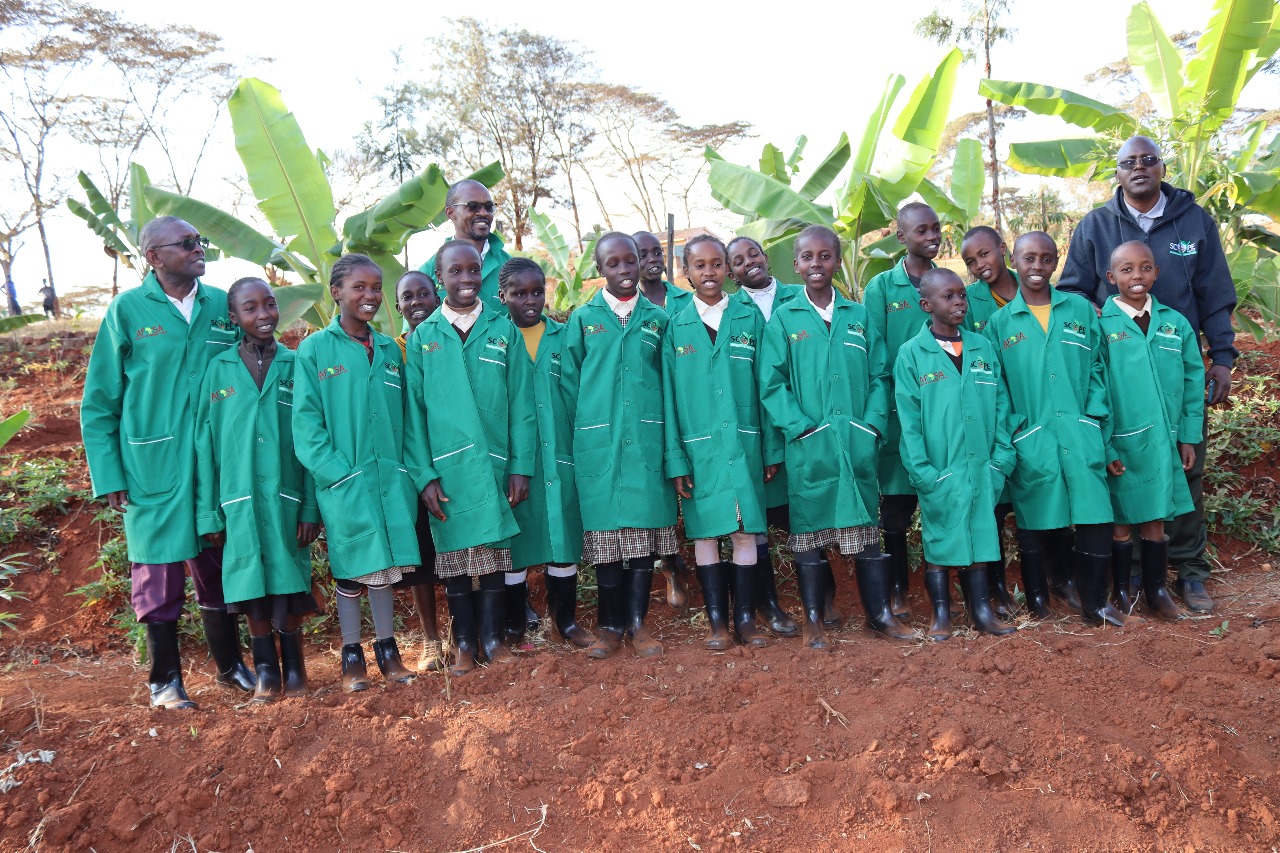
By adopting sustainable farming practices through permaculture, the school has reduced its reliance on costly food supplies while improving the nutritional health of its pupils, ensuring they receive balanced diets that support growth and boost academic performance.
Speaking to County Splash, school head Eliud Mutungi explained that the institution embraced permaculture not only for beautification but also as a reliable source of food supplements for learners.
He credited the initiative with greatly improving students’ nutrition. The school was introduced to the concept by the Schools and Colleges Permaculture Programme (SCOPE) Kenya, which trained staff and later selected Kivai as a pioneer institution in Makueni Sub-County.
“We were invited by SCOPE Kenya for training on permaculture, and luckily after the training, our school was selected as a pioneer institution in Makueni Sub County,” Mutungi said. “We launched the project in August 2023, and as you can see, it is already thriving, providing food for our students and even benefiting members of the surrounding community.”
The project’s impact has gone beyond nutrition to enrollment.
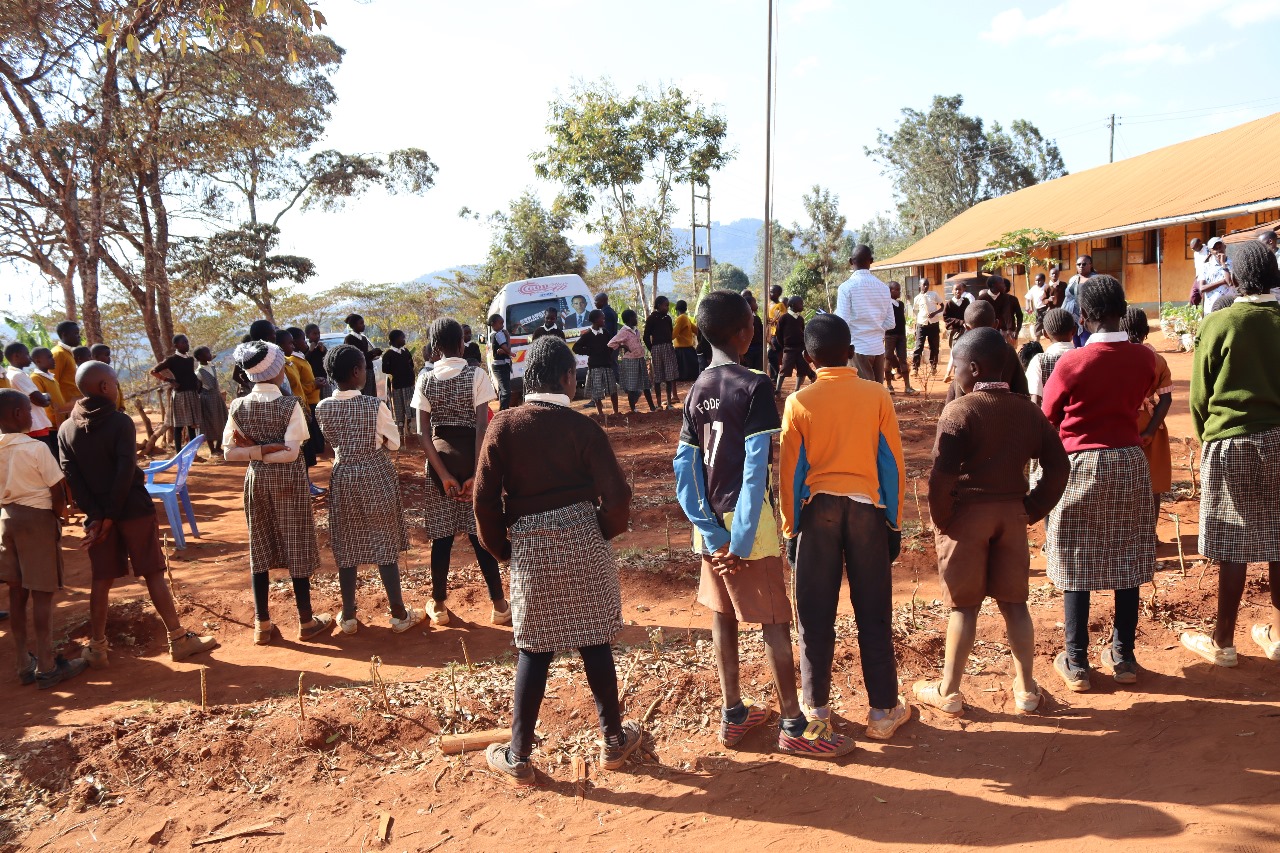
According to Mutungi, the school population has risen from 65 to 141 pupils since the programme began.
He described it as a blessing, noting that before its launch, many households in the area struggled with food scarcity due to low incomes, which made it difficult for parents to support their children’s education.
“Once we started this project and began providing meals at school, the population grew significantly since there was enough food to keep learners in class,” he explained.
Kivai School’s permaculture project also champions organic farming methods.
Mutungi emphasized that they do not use insecticides or chemical fertilizers, instead relying on natural pest control and manure to enrich the soil, making the food safe and healthy for consumption.
Beyond agriculture, the programme aligns with the Competency-Based Education (CBE) curriculum, giving students hands-on farming experience that builds competence and discipline.
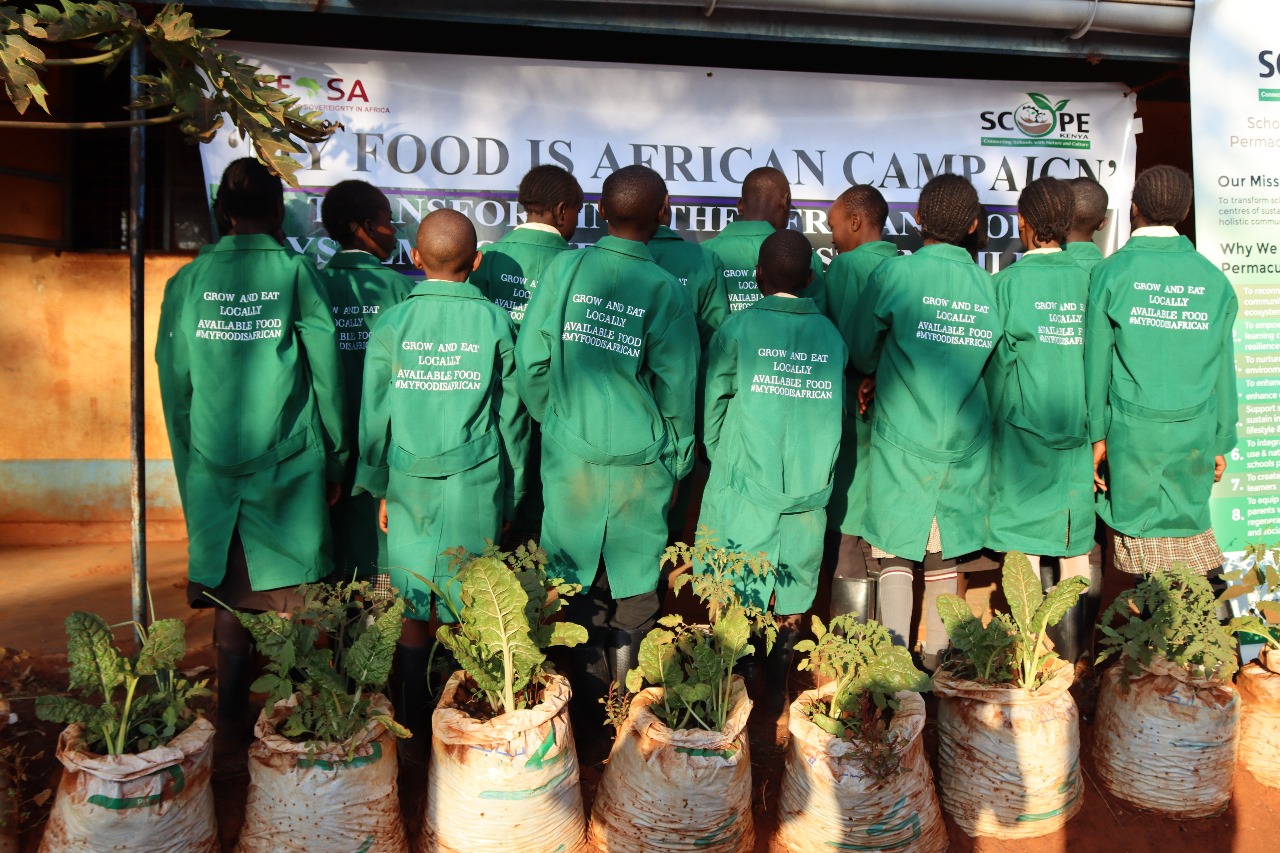 Scope Kenya Staff, Journalist, Teachers and students on a field tour at Kivai Comprehensive School in Makueni County
“The impact of this programme is that it supports the CBE curriculum. It is one of the supportive initiatives that ensure learners become competent by the end of their studies, while also instilling discipline,” he said.
He further highlighted that the school is intentional about preparing balanced meals.
“We make sure that the children get all the necessary nutrients from the green vegetables and cassava or potatoes grown here at school. These foods provide the balanced diet that every child deserves,” he added.
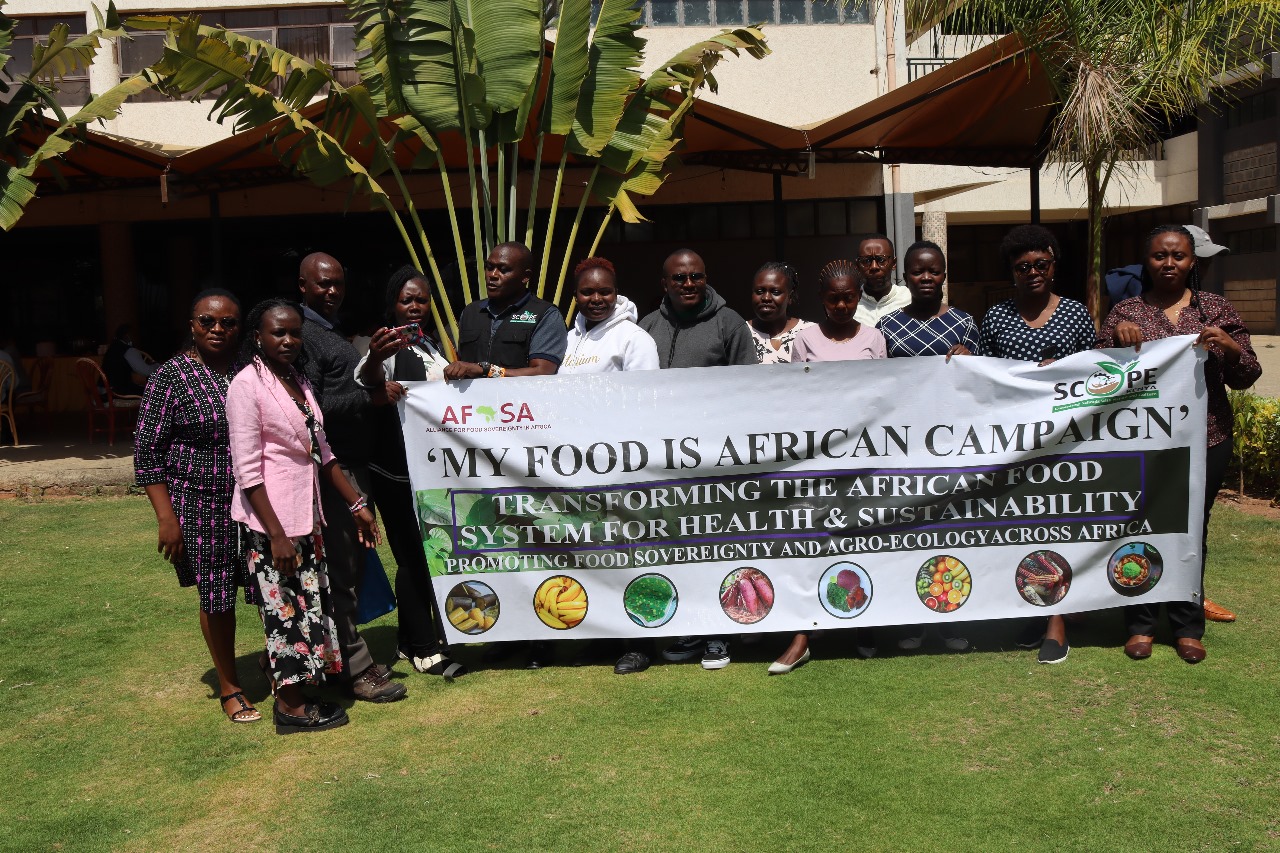
John Macharia the SCOPE Kenya national coordinator says that the organization was started in 2014 with the intention of promoting gardening and environmental conservation in schools through permaculture approach
He added that they identified the need that most school didn’t have school feeding programs and if any they lacked nutritional value
“we came in to support schools after we noted that many school didn’t have school feeding programs, and those that had were only offering foods that did not meet the nutritional requirements.
Macharia observed that many children either drop out of school or miss classes due to lack of adequate food, a challenge that negatively impacts their academic performance. He noted that Scope has stepped in to address this situation.
He further explained that permaculture not only enhances food security but also helps reduce diseases in schools, especially in dry areas.
“If we plant green vegetation around the school compound, particularly in semi-arid regions, it will help reduce illnesses such as eye problems and persistent coughs among pupils, which often arise from dust,” he said.
Macharia also emphasized the importance of involving young people in agriculture.
“Scope realized that agriculture has largely been left to the older generation. We saw the need to engage the youth, who form the majority, by connecting what they learn in class with practical work on the farms,” he explained.
In semi-arid areas, Scope encourages the planting of drought-resistant crops such as cassava, bananas, and potatoes to ensure sustainability.
He added that the organization is currently working with 140 schools across 15 counties and is open to partnering with any other institutions interested in the initiative.